The Science of Tasting: From Sensory Reception to Professional Judgment of Food and Dish Quality
A Reference Study on Flavor Formation, Multisensory Integration, Sensory Memory, Perceptual Bias, and the Foundations of Professional Evaluation and Culinary Judging
Download article PDF
The Science of Tasting: From Sensory Reception to Professional Judgment of Food and Dish Quality
Introduction
Tasting is not a simple act limited to the contact between food and the tongue. Nor can it be reduced to the ability to distinguish sweetness, saltiness, sourness, bitterness, and umami. In reality, tasting is a complex sensory, neurological, and cognitive process. It begins before food enters the mouth, continues throughout chewing and swallowing, and may remain present in memory and emotion long after the experience has ended.
When a person sees a dish, the initial evaluation process begins through its color, shape, presentation, portion size, and the arrangement of its components. As the food approaches the nose, volatile aromatic compounds contribute to the expected perception of flavor. During consumption, taste, smell, touch, temperature, and chemical irritation interact before the brain integrates these signals and compares them with previous experiences, cultural memory, and personal expectations.
What people commonly describe as “taste” is therefore not produced by the tongue alone. It is the result of an interaction between multiple senses and mental processes. A dish may be chemically balanced yet fail to achieve acceptance because of its aroma, texture, appearance, or association with an unpleasant memory. Conversely, a familiar dish may receive a high evaluation because of its connection to family or national identity, even when it contains certain technical imperfections.
This distinction becomes especially important in professional tasting and culinary judging because a trained evaluator should not judge food solely according to personal preference. Preference represents an individual response, whereas professional evaluation requires the assessor to describe sensory characteristics, measure their intensity, determine their balance, identify defects, and compare the findings with the standards of the product category, competition, or food being examined.
The transition from saying “I liked this dish” to delivering a professional judgment that can be explained and documented represents the essence of tasting science. A judge is not merely asked whether the food is enjoyable. The judge must explain the reasons behind the decision, identify the sensory evidence upon which it is based, and separate—wherever possible—the product’s observable qualities from personal preferences, expectations, and previous impressions.
This article therefore aims to provide a reference framework for understanding tasting, explaining its principal mechanisms, and examining its relationship with smell, touch, memory, emotion, and culture. It also clarifies the differences between everyday tasting, sensory analysis, and professional culinary judging.
First: Tasting as an Integrated System
In everyday language, the term “tasting” is used to describe the complete experience that occurs when consuming food or drink. From a scientific perspective, however, three fundamental concepts must be distinguished: taste, flavor, and sensory evaluation.
Taste is the sensation produced primarily when dissolved substances interact with taste receptors in the mouth. Flavor is the combined experience resulting from the integration of taste, aroma, mouthfeel, temperature, and other chemical sensations. Sensory evaluation, meanwhile, is a structured method of using the senses to describe, measure, analyze, and compare the characteristics of food products.
When eating a piece of fruit, the tongue can detect sweetness and acidity, but identifying the type of fruit depends largely on aroma. Texture helps determine whether the fruit is ripe, firm, fibrous, soft, or overripe, while temperature affects aroma release, sweetness, and the overall sensory experience. Once this information has been integrated, the brain forms a unified perception known as flavor.
Flavor is therefore not a single substance that exists independently within food. It emerges from the interaction between the product’s characteristics and the human sensory system. The product supplies chemical compounds and physical properties, while the body receives these stimuli, converts them into neural signals, and allows the brain to interpret them according to context and previous experience.
For this reason, the same product may produce different flavor experiences in two people. These differences may result from receptor sensitivity, age, health status, smoking, medication, sensory training, cultural background, hunger, psychological condition, or the expectations of the evaluator.
This does not mean that sensory evaluation is random or impossible to standardize. It means that standardization requires an understanding of the sources of variation and systematic efforts to control or reduce them. Professional sensory evaluation therefore applies defined conditions relating to the testing environment, lighting, sample temperature, order of presentation, sample quantity, coding, intervals between samples, and the health and sensory condition of the assessors.
Second: Basic Tastes and the Function of the Tongue
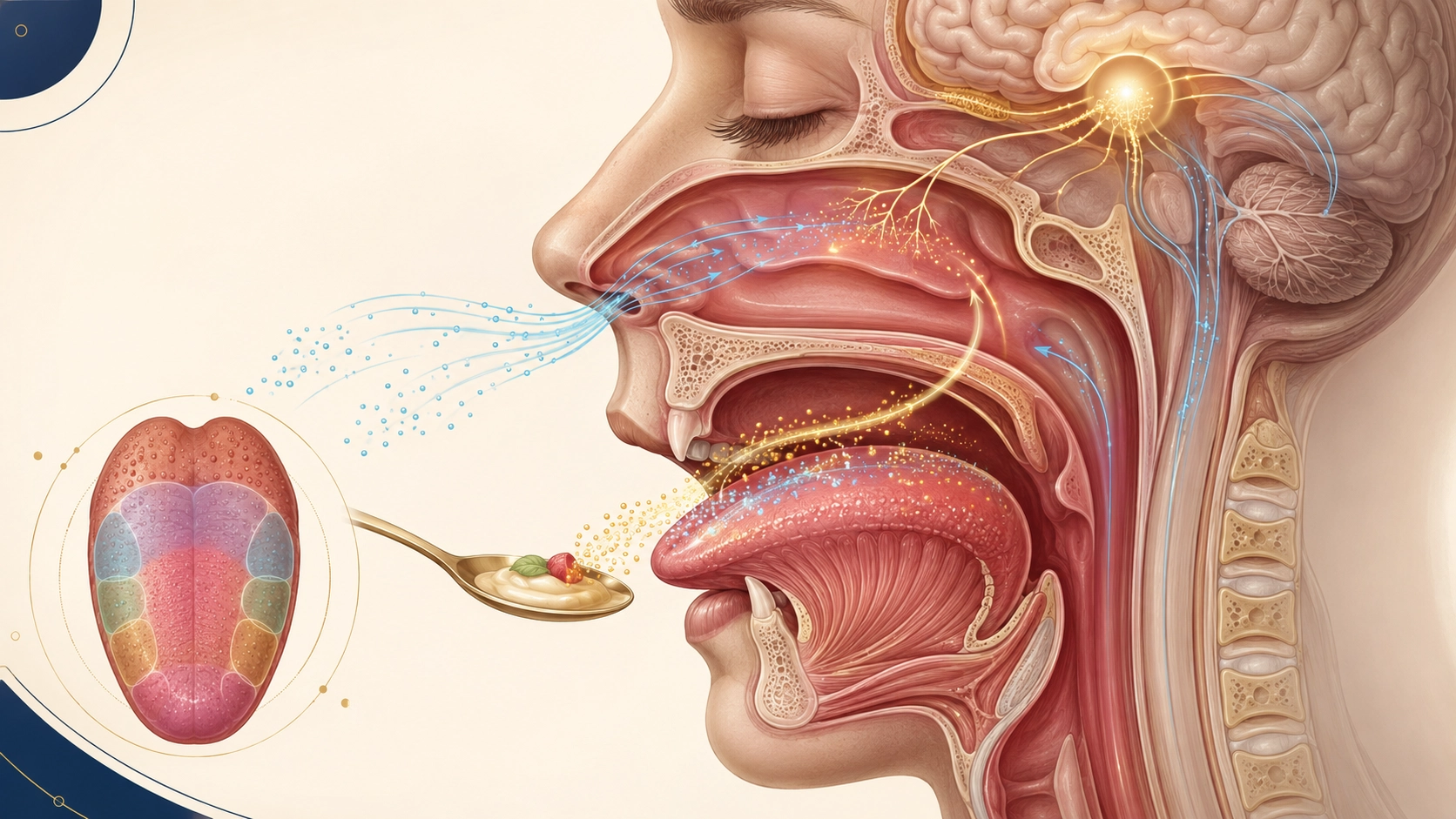
A common belief suggests that each area of the tongue is exclusively responsible for detecting a particular taste: sweetness at the tip, sourness and saltiness along the sides, and bitterness at the back. This simplified “tongue map” does not accurately represent how the gustatory system functions. Multiple areas of the tongue and oral cavity can respond to different tastes, although some variations in sensitivity may exist.
The most widely recognized basic tastes are:
- Sweetness: Sweetness is commonly associated with sugars and certain other compounds and may biologically indicate a readily available source of energy. However, the perception of sweetness does not depend on sugar concentration alone. It is also influenced by temperature, acidity, aroma, and the product’s overall composition.
- Saltiness: Saltiness is primarily associated with mineral ions, especially sodium. It plays an important role in enhancing flavors, but excessive salt can become dominant and obscure other sensory details.
- Sourness: Sourness is produced by acids. It can give food freshness and liveliness and may help balance fat and sweetness. A professional evaluator must distinguish between balanced acidity and harsh acidity or undesirable sourness resulting from spoilage.
- Bitterness: Bitterness is associated with a broad range of compounds and may biologically function as a warning signal against potentially harmful substances. Nevertheless, bitterness is not always a defect. It is desirable in products such as coffee, cocoa, and certain vegetables, provided that it remains harmonious with the sensory identity of the product.
- Umami: Umami is often described as a savory, mouth-filling, or deeply satisfying taste associated with compounds such as glutamate and certain nucleotides. It is present in meat, stock, aged cheese, tomatoes, mushrooms, and many other foods. It contributes to sensory depth, fullness, and persistence.
These tastes do not operate independently. Sweetness may reduce the perception of sourness or bitterness. An appropriate amount of salt may enhance sweetness or savory depth, while an excessive concentration of one component may suppress the rest of the sensory composition.
The success of a dish is therefore not determined merely by the presence of individual tastes. It depends on how those tastes are organized, how they interact, how their intensity develops, and how long their effects remain perceptible.
Third: Smell and Its Central Role in Flavor Formation
Smell is one of the most important components of flavor perception. Humans perceive food aromas through two principal pathways. The first occurs when aromas are inhaled through the nose before eating. The second occurs when volatile compounds travel from the mouth toward the nasal cavity during chewing and swallowing.
The first pathway is known as orthonasal olfaction, and it provides the evaluator with an initial aromatic impression before the food enters the mouth. The second is called retronasal olfaction, and it plays a central role in recognizing flavor while food is being consumed.
The importance of smell becomes especially noticeable during nasal congestion. A person may still be able to detect sweetness, saltiness, sourness, or bitterness, but may struggle to recognize the aromatic details that distinguish an apple from a pear, vanilla from cinnamon, or one spice from another.
A professional evaluator should not merely classify an aroma as pleasant or unpleasant. Instead, it should be examined through a structured set of questions:
- Which aromatic family is dominant?
- Is the aroma natural and consistent with the product’s identity?
- What is its intensity, and how quickly does it appear?
- Does the aroma develop during chewing?
- Are there signs of burning, oxidation, or undesirable fermentation?
- Does the aromatic effect persist after swallowing?
- Is the aroma harmonious with the taste, or does it create a sensory contradiction?
Through this transition from general impression to systematic description, smell becomes an analytical instrument that supports clear professional judgment rather than remaining an instinctive response that cannot be adequately explained.