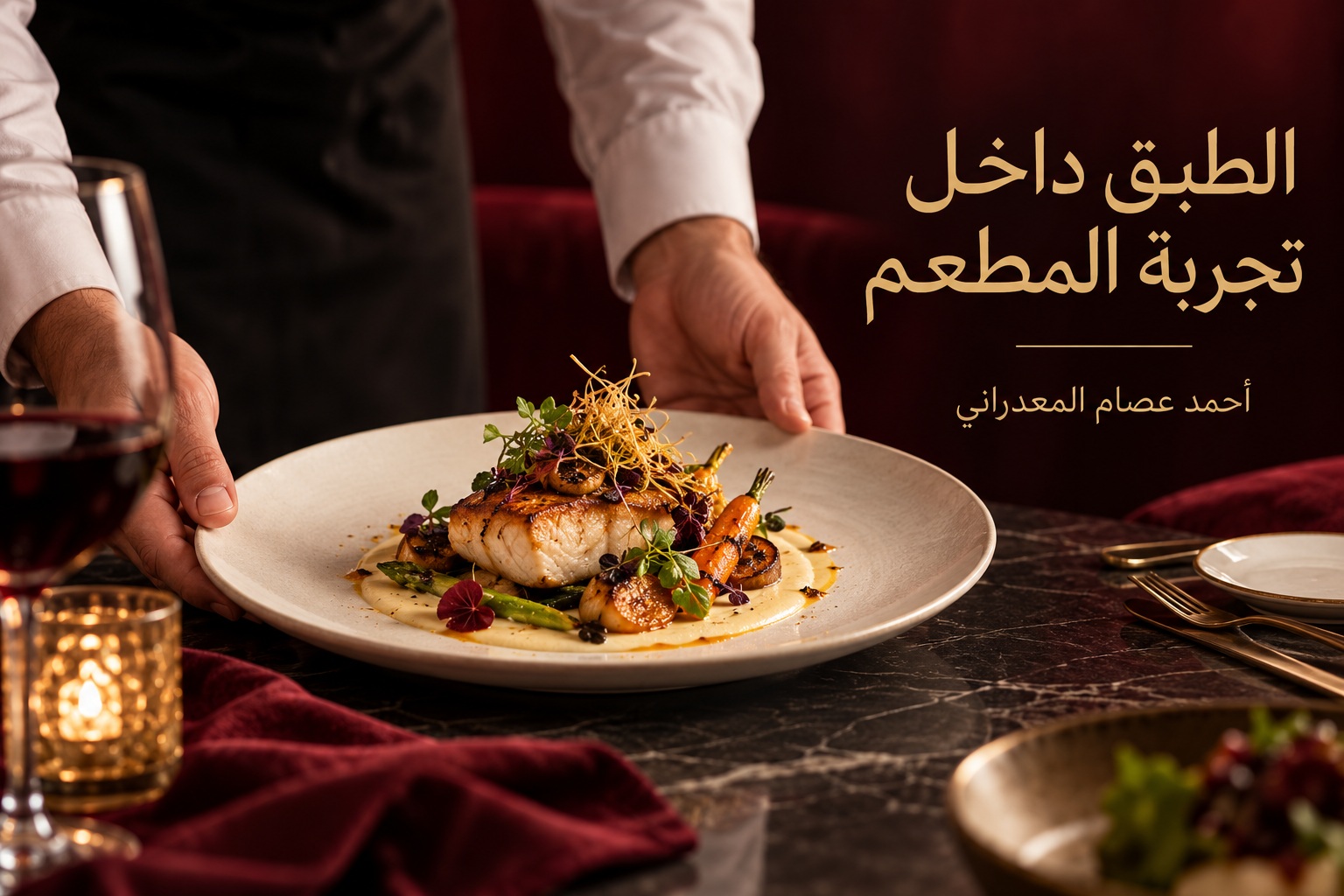
The Dish Within the Restaurant Experience: Separating Product and Service
A proposal by Ahmad Issam Maadarani identifying what an evaluation did and did not examine
Download article PDFBy Ahmad Issam Maadarani
Restaurant dishes differ from samples presented in controlled judging tasks. Waiting, communication and delivery enter the experience without all becoming undefined judgments about cooking. This article proposes parallel product and service records followed by an explanation of their relationship. It is neither an accredited restaurant classification nor a food safety examination.
1. Define the evaluation unit
A report may examine one dish, a complete meal, one visit or consistency across visits. These require different samples. One excellent meal does not establish regularity; one delay does not establish universally poor service. State unit, boundaries, date and conditions. Moving from dish to experience requires an explicit change of question rather than broader conclusions from unchanged evidence.
2. Product and service records
The product record describes food as received: flavour, texture, accessible bites and fulfilment of description. The service record documents ordering information, timing, arrival sequence, communication and interventions. This clarifies observation locations without artificially separating reality. A possible relationship can then be stated without declaring an unknown cause: softness after waiting does not establish waiting as its sole cause.
3. Hypothetical case: good food, unsuitable arrival
Shared-meal components arrive too far apart to eat together, although each tastes good independently. Product assessment preserves those qualities and tasting conditions. Whole-meal assessment includes missing synchronisation where relevant to the service promise. Do not reduce flavour scores to punish timing or omit timing because food tastes good. Both descriptions are legitimate when their subjects are clear.
4. The promise before ordering
Examine actual menu or service promises: composition, presentation, agreed sequence or communicated choices. Do not invent obligations absent from the offer. Document changed orders or disclosed substitutions before interpretation. Enjoying a story does not establish descriptive accuracy: pleasant experience and a missing declared component can coexist and need separate treatment.
5. Causal responsibility needs documentation
Defects may precede or occur during service; food may change on the table before tasting. Record observations without claiming access to unseen preparation. Note relevant diner intervention or delay. A replacement plate remains a later case rather than erasing the original. Response can be evaluated as service without proving the initial defect never occurred.
6. Visits, repetition and independence
Consistency assessment records visits, preparations and conditions; many bites from one plate are not independent visits. Define observation plans before broad conclusions and disclose relevant announced visits, invitations or special treatment. Few visits cannot guarantee every time or item. Price is a separate description, not independent evidence of flavour quality.
7. Examine report quality
Ask an unfamiliar reader to distinguish food observations from service events and evidence from hypotheses. Check that conclusions match sample units and that one problem is not counted everywhere without explanation. Satisfaction and attractive photographs cannot establish rigorous reporting, and tasting descriptions cannot establish unexamined safety.
8. Conclusion
Useful criticism identifies product, service and their relationship. It neither reduces a restaurant to one bite nor an unsatisfactory visit to attractive food. Explain what succeeded, what failed, what observation supports and what requires further review.
9. A concise working sheet
| Field | Review question | What to record |
|---|---|---|
| Unit | Dish, meal or visit? | Define the assessment unit before producing a score. |
| Product | What was the food condition when tasted? | Record execution, arrival and observed changes. |
| Service | What performance was observed? | Record sequence and information separately from food quality. |
| Repetition | How many separate visits? | Several dishes in one visit do not constitute repeat visits. |
| Disclosure | Were visit conditions different? | Disclose invitation, special treatment and inference limits. |
Suggested citation: Maadarani, Ahmad Issam (2026). “The Dish Within the Restaurant Experience: Separating Product and Service” Methodological article, version 1.0.
© 2026 Ahmad Issam Maadarani. All rights reserved, subject to applicable legal exceptions.