A history of Lebanese cooking — the pantry, the seasons and the family recipe
Download article PDFIn this article
How preserved foods, seasonal work and family recipes help explain the history of Lebanese cooking.
Read history through ingredients and their uses
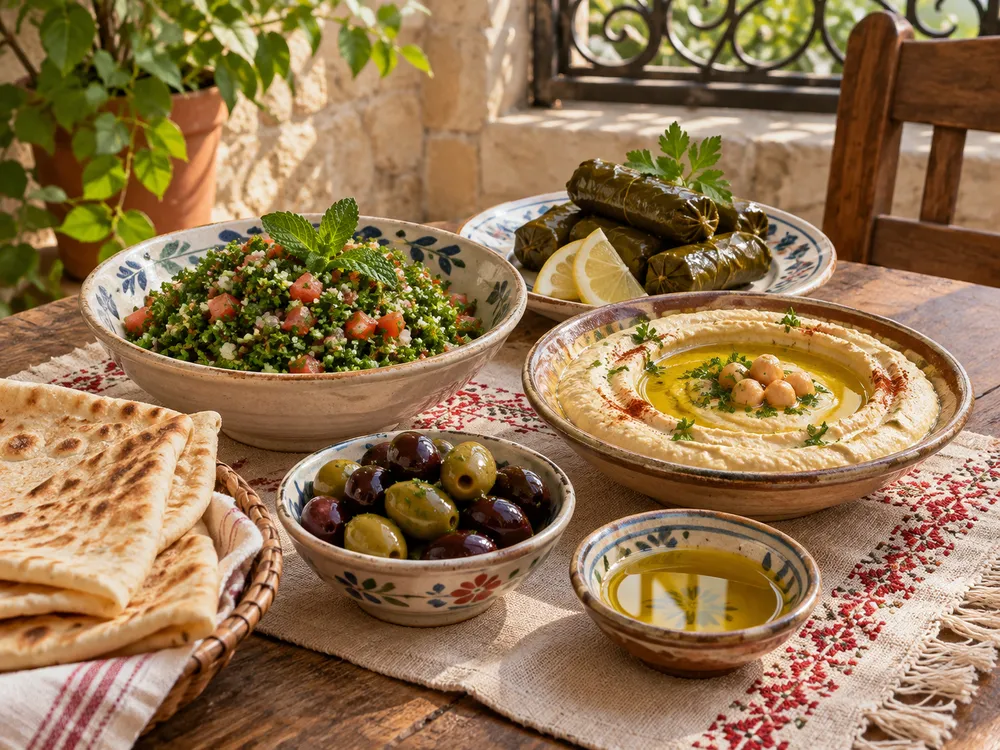
Look at what is grown, bought and kept for winter. One table may bring together fresh herbs in tabbouleh, olive oil in a dressing and bulgur in a family dish. Each ingredient follows a different route from field to table. Record place, season, preparation and the source of the information.
The pantry links harvest and table
The mouneh pantry keeps part of a harvest for later, including through drying and pickling. Comparing households can explain why recipes differ. One may use dried sumac while another seasons with lemon. Recording those choices shows how a recipe works in its family setting.
Turn family memory into a reviewable record
Begin with a recipe told by someone who knows how to make it. Ask when it was served, which ingredient changed with the season and how the cook knew it was ready. Attribute the oral account and keep it separate from what you observed during preparation. If an account dates the dish or links it to a region, record the source and date of that claim.
Documentation exercise
Choose two versions of the same dish. For each, record the region or family, the main ingredient, the season and the way it is served. Note one difference you can weigh or observe, such as the ratio of grain to herbs, and identify what still needs evidence.
Further reading — American University of Beirut — Food Heritage Foundation.