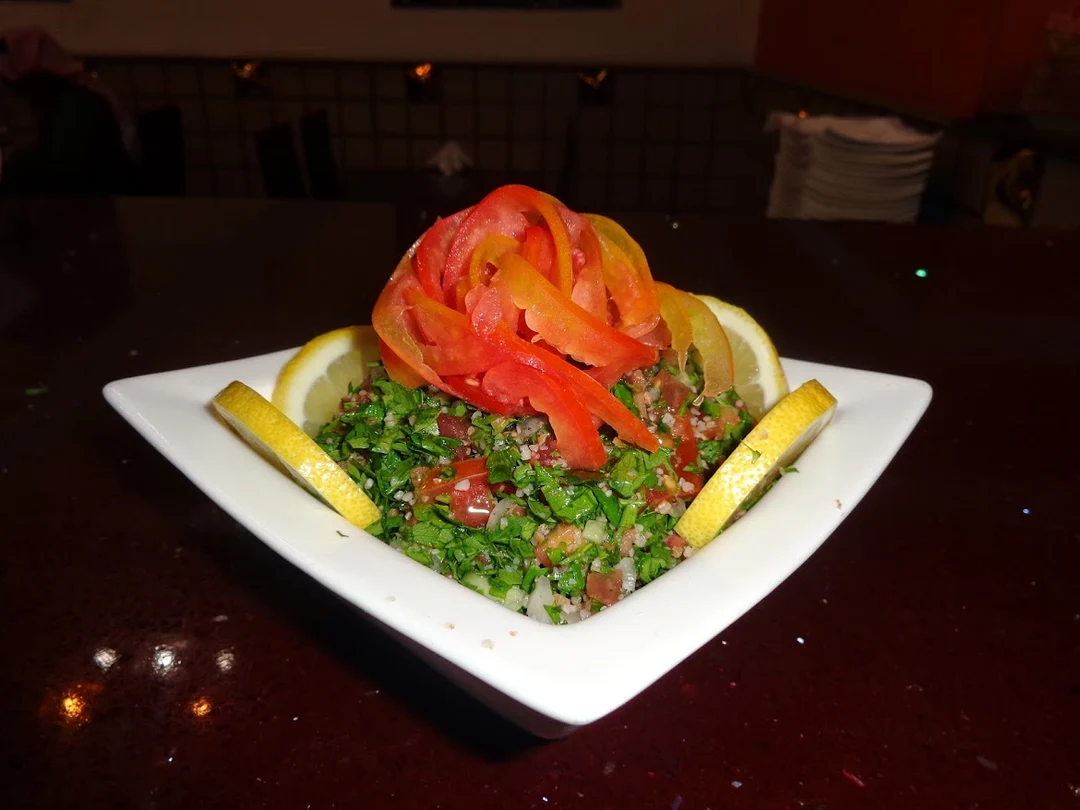
Lebanese tabbouleh — standardised recipe and tasting card
Download article PDFIn this article
An IUOAMC Magazine practical guide to making four side portions of Lebanese tabbouleh and assessing texture, acidity and flavour balance.
Estimated nutrition
Approximately 134 kcal per side portion, or 534 kcal for the whole recipe when divided into four equal portions. The estimate uses the listed ingredient weights and varies especially with the amount of olive oil used.
Nutritional benefits
Parsley provides vitamins C and K. Bulgur and vegetables contribute dietary fibre, and olive oil provides monounsaturated fats.
Nutrient data source — USDA FoodData Central.
Ingredients for four side portions
| Ingredient | Weight in grams |
|---|---|
| Parsley, washed and dried, thick stems removed | 140 |
| Mint leaves, washed and dried | 15 |
| Firm tomatoes | 160 |
| Spring onions | 30 |
| Fine bulgur, dry weight | 35 |
| Lemon juice | 45 |
| Extra virgin olive oil | 35 |
| Fine salt | 3 |
Bulgur contains wheat and gluten.
Preparation
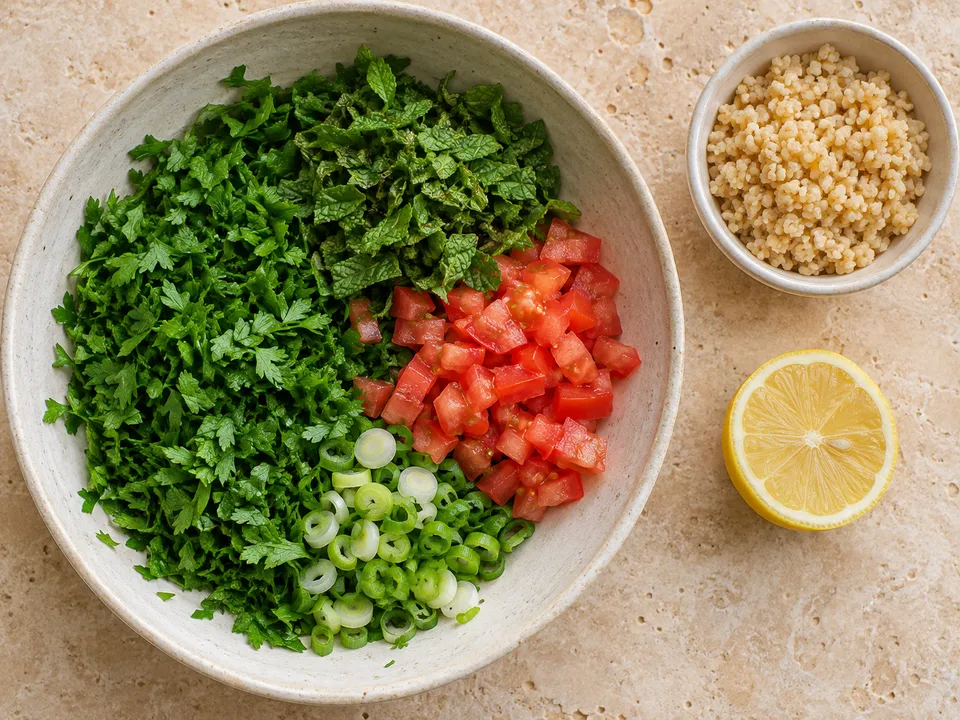
- Prepare the fine bulgur according to the packet instructions until tender. Drain excess water and let it cool if hot water was used. Reserve the lemon juice for the dressing.
- Chop the parsley and mint with a sharp knife. Finely dice the tomatoes and drain excess liquid, then slice the spring onions.
- Gently toss the herbs, vegetables and bulgur. Add the lemon juice, olive oil and salt just before serving.
Tasting card
- Texture: tender, distinct herbs, soft bulgur without clumps, and no pooling liquid.
- Acidity: a clear lemon note with parsley and mint aromas still recognisable.
- Balance: the oil lightly coats the ingredients and the salt brings out the flavour of the vegetables.
Comparison exercise
Split one batch into two equal samples and add extra lemon juice to just one. Serve both at the same time. For each sample, rate the intensity of acidity from 1 (mild) to 5 (strong) and note how clearly you can detect the herbs.