Jordanian cooking — mansaf as a shared table
Download article PDFIn this article
A practical reading of Jordanian mansaf, from the layout of the platter to documenting variations between households.
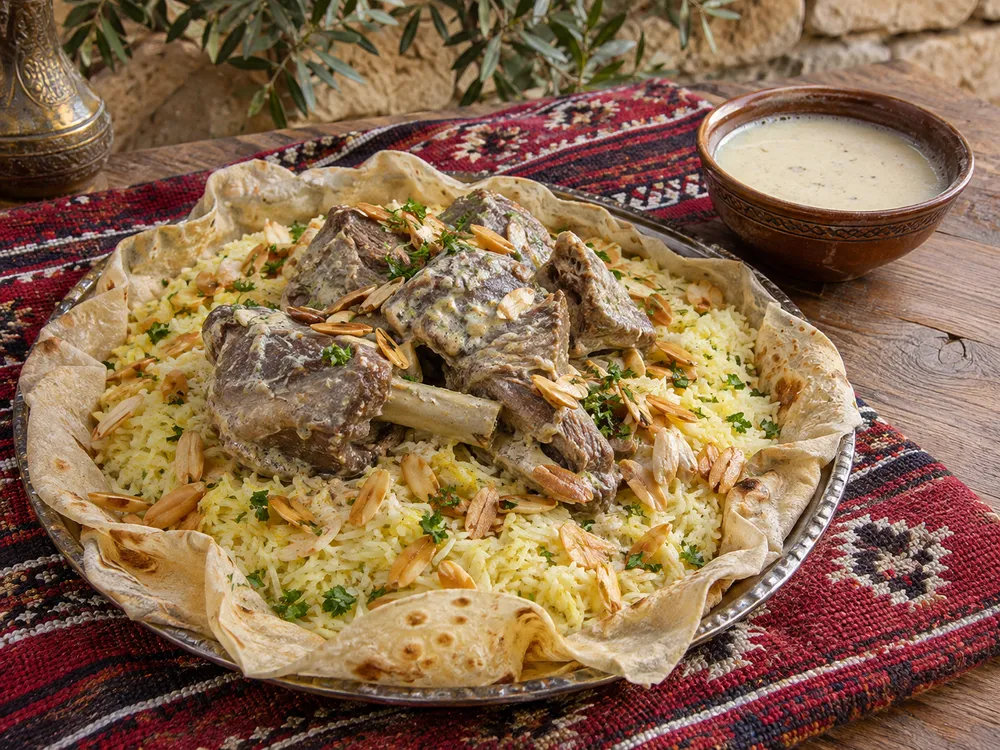
Identify each layer and its role
UNESCO describes meat cooked in a yoghurt sauce and served with rice or sometimes bulgur over thin bread. Each layer has a role in service that can be described before tasting. Note the bread, grain, way the sauce is served and any garnish so readers can identify the version you documented.
Hospitality starts during preparation
UNESCO describes preparation as a social occasion and notes the family’s role in serving platters around which guests gather. Jordanian mansaf and its social and cultural meanings were inscribed on the Representative List of the Intangible Cultural Heritage of Humanity in 2022. Ask the host about the occasion, the order of service and how family members share the work.
Record differences between household versions
When comparing two accounts, record the names each family uses, the ingredients they mention and the order of the layers. Keep observations separate from what the family tells you. If you provide a weighed teaching example, identify it as the version you tested.
Documentation exercise
Sketch the platter as served. Record three observations: how the bread holds beneath the grain, how the sauce is distributed and how easily portions can be shared. Ask the host what changes for another occasion and record the answer in context.
Further reading — UNESCO — Al-Mansaf in Jordan.